
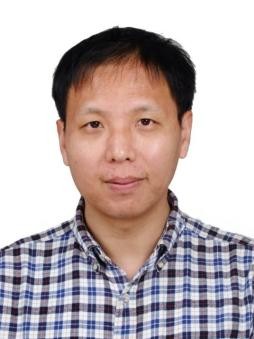
Xiangjie Kong
IEEE Senior Member, CCF Distinguished Member, ACM Member
Zhejiang University of Technology, China
Dr. Xiangjie Kong is currently a Full Professor and Acacemic Associate Dean
in the College of Computer Science & Technology, Zhejiang University of Technology (ZJUT),
China. Previously, he was an Associate Professor in School of Software, Dalian University of
Technology (DUT), China, where he was the Head of the Department of Cyber Engineering. He is
the Founding Director of City Science of Social Computing Lab (The CSSC Lab)
(http://cssclab.cn/). He is/was on the Editorial Boards of 6 International journals. He has
served as the General Chair or Program Chair of more than 10 conferences. Dr. Kong has
authored/co-authored over 200 scientific papers in international journals and conferences
including IEEE TKDE, IJCAI, ACL, IEEE TMC, ACM CSUR, ACM TKDD, IEEE TNSE, IEEE TII, IEEE
TITS, IEEE NETW, IEEE COMMUN MAG, IEEE TVT, IEEE IOJ, IEEE TSMC, IEEE TETC, IEEE TASE, IEEE
TCSS, ACM TSON, ACM TSAS, WWWJ, etc.. 5 of his papers is selected as ESI-Hot Paper (Top 1‰),
and 20 papers are ESI-Highly Cited Papers (Top 1%). His research has been reported by Nature
Index and other medias. He has been invited as Reviewers for numerous prestigious journals
including IEEE TKDE, IEEE TMC, IEEE TNNLS, IEEE TNSE, IEEE TII, IEEE IOTJ, IEEE COMMUN MAG,
IEEE NETW, IEEE TITS, TCJ, JASIST, etc.. Dr. Kong has authored/co-authored three books (in
Chinese). He has contributed to the development of 14 copyrighted software systems and 30
filed patents. He has an h-index of 51 and i10-index of 122, and a total of more than 8600
citations to his work according to Google Scholar. He is named in the 2019-2023 world’s top
2% of Scientists List published by Stanford University. He is named in the 2022-2024 Best
Computer Science Scientists List published by Research.com. Dr. Kong received IEEE Vehicular
Technology Society 2020 Best Land Transportation Paper Award, IEEE CSCWD 2024 Best Paper
Award, and The Natural Science Fund of Zhejiang Province for Distinguished Young Scholars.
He has been invited as Keynote Speaker at more thant 10 international conferences, and
delivered a number of Invited Talks at international conferences and many universities
worldwide. His research interests include big data, network science, and computational
social science. He is a Distinguished Member of CCF, a Senior Member of IEEE, a Full Member
of Sigma Xi, and a Member of ACM.
Speech Title: From AI Education to Trustworthy Educational AI: Large Language Models,
Teacher Agents, and Future Talent Cultivation

Song Yanjie
The Education University of Hong Kong, China
SONG Yanjie (PhD) is a Full Professor in the Department of Mathematics and Information
Technology, Associate Director of Academy for Applied Policy Studies and Education Futures
(AAPSEF), Associate Director of Centre for Excellence in Learning and Teaching (CLET), and
Assistant Dean of Graduate School at the Education University of Hong Kong. She obtained her
PhD in educational technology at the University of Hong Kong and her MEd. in IT, Multimedia
and Education at the University of Leeds, the UK. She was trained and obtained TEFL
(Teaching English as a Foreign Language) Certificate at the University of Cambridge Local
Examinations Syndicate, the UK. Before joining the institute, she worked as a Senior
Research Assistant at the University of Hong Kong, a Research Fellow (later a Research
Scientist position offer) in the Learning Sciences Lab, at the National Institute of
Education, Nanyang Technological University, Singapore. Yanjie was among the top 2% in the
Stanford list of the world’s most-cited scientists in education.
Speech Title: TBA
Abstract: TBA
Zhi Liu
CAA Life Member
Central China Normal University, China
Zhi Liu is a Professor, PhD supervisor, and Deputy Head of the Department of Data Science
within the Faculty of Artificial Intelligence in Education at Central China Normal
University (CCNU). He has maintained a long-term appointment as a Guest Researcher at the
Humboldt University of Berlin since 2017 and is currently a Visiting Scholar at the German
Research Center for Artificial Intelligence (DFKI) for the 2025-2026 term. Specializing in
text mining, educational data mining, and intelligent tutoring systems, Professor Liu has
published over 60 SCI/SSCI-indexed papers in top-tier journals such as Knowledge-Based
Systems, Computers & Education, and IEEE Transactions on Learning Technologies, including
six ESI Highly Cited Papers (Top 1%). His scholarly impact is further underscored by his
recognition as a Top 1% National Highly Cited Researchers (2024-2025). As a leading
researcher, he serves as the Principal Investigator for the National Key R&D Program of
China (2030 Major Projects) and several projects under the National Natural Science
Foundation of China. Professor Liu holds various academic leadership roles, including Chair
of the Organizing Committee for ICET, Guest Associate Editor for Frontiers in Artificial
Intelligence, and Editorial Board member for Discover Education. His distinguished
contributions have earned him numerous prestigious accolades, most notably the First Prize
of the Hubei Social Science Outstanding Achievement Award (2025), the First Prize of the
Science and Technology Progress Award of Hubei Province (2024), and the First Prize of the
Hubei Province Teaching Achievement Award (2022).
Speech Title: Beyond Generic LLMs: Pedagogical Conversational Agents as Theory-Driven
Scaffolds for Multidimensional Engagement Across Educational Contexts
Abstract: While integrating Large Language Models (LLMs) into education shows promise,
unstructured access often induces metacognitive laziness and superficial engagement. This
presentation introduces the Pedagogical Conversational Agent (PCA) paradigm, which
transcends generic AI by embedding established learning theories into interaction logic.
Grounded in Self-Determination Theory (SDT) and Constructive Controversy, our PCA
instantiation, SODA, operationalizes "pedagogical friction" through the Six Thinking Hats
framework to foster critical inquiry rather than providing direct answers. I will first
elucidate the theoretical foundations and technical implementation of this SDT-driven
architecture. Subsequently, I will present empirical evidence from a semester-long
quasi-experiment in higher education collaborative learning, demonstrating that PCAs
significantly outperform generic LLMs in team performance and reshape emotional engagement
trajectories toward productive confusion. Finally, I will discuss the adaptability of this
PCA framework across diverse domains, including its integration with PhET simulations for
science education and Scratch for programming education. Collectively, these studies
illustrate that theory-driven AI scaffolding is essential for transforming passive AI
consumption into active, multidimensional knowledge construction, offering a scalable
blueprint for intelligent educational systems.